ACE Powerhouse is already creating connections
It's still under construction, but during Society Expo 2026 it became clear that the building is already fulfilling one of its most important purposes: bringing people together.
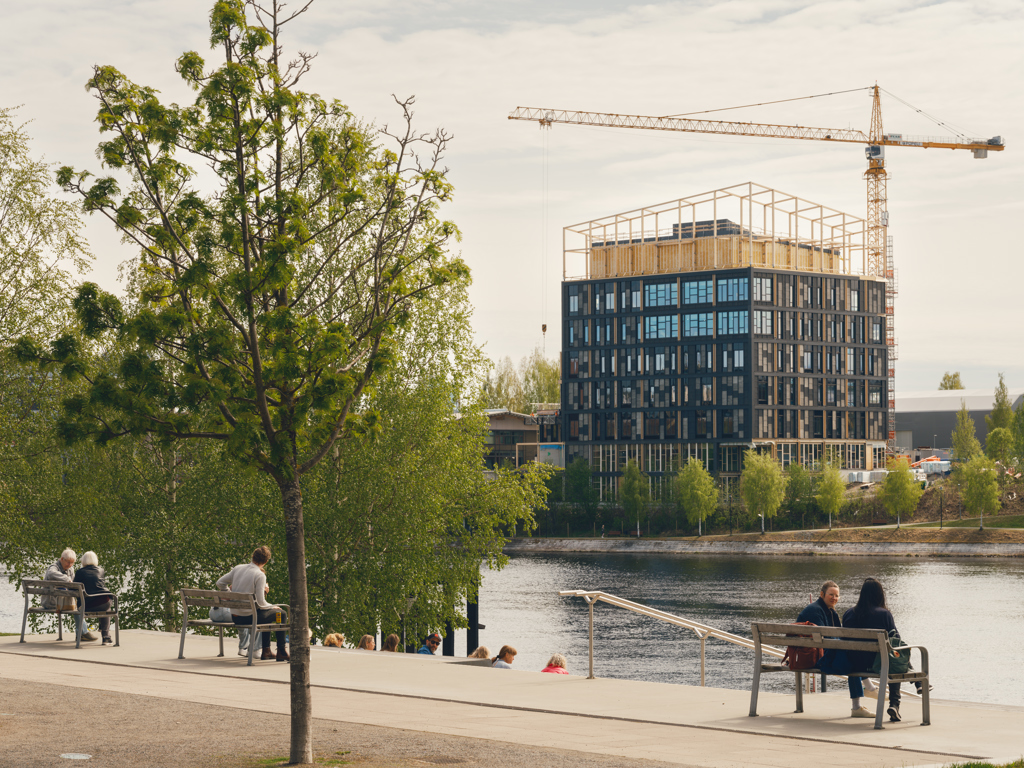
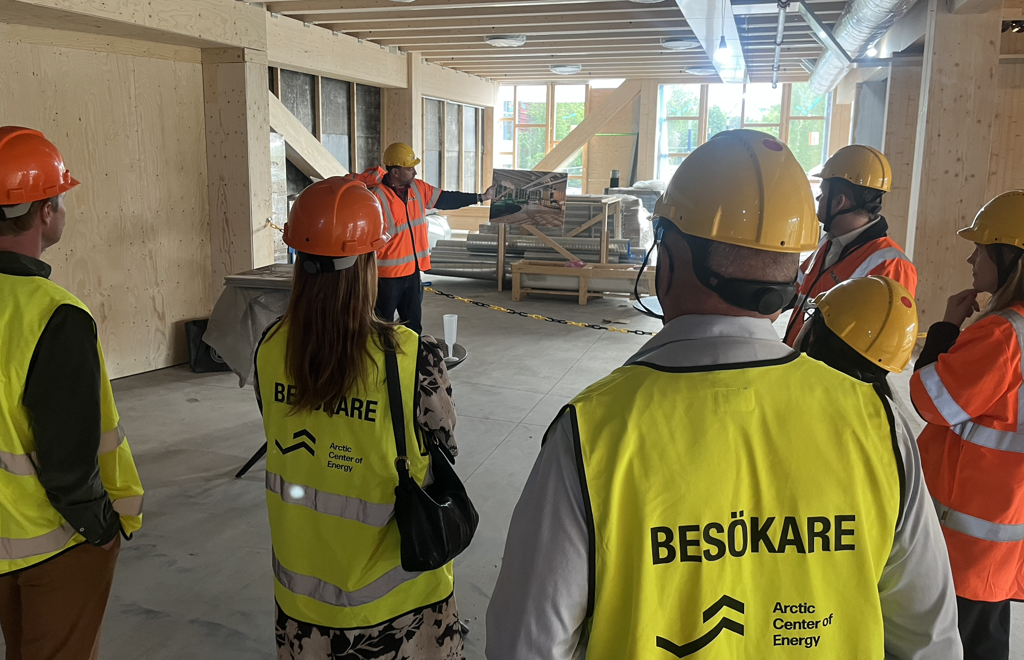
Throughout the two-week event, visitors from around the world came to Campus Skellefteå to explore new solutions for electrification, sustainable industry and societal transformation. ACE Powerhouse served as a focal point in many of those conversations, offering a glimpse of the future hub now taking shape in the heart of campus.
In total, ACE Powerhouse engaged 330 visitors through study visits, delegations, conferences, media activities and guided tours. Of these, 108 visited on site while another 222 participated through activities connected to the event. The visitors represented ten nationalities and came from academia, industry and the public sector. Interest was also high among media, local residents and school classes.
“The level of engagement during SE26 really confirmed what we're building towards. ACE Powerhouse is already functioning as a meeting place, through the collaborations and conversations it enables,” says Sanna Orellano, ACE Powerhouse lead.
Growing international interest
The interest in ACE Powerhouse is not limited to Skellefteå.
During SE26, the project attracted international press and curated media visits from several countries. The visit were carried out in collaboration with the Swedish Institute, highlighting ACE Powerhouse within a broader international communication effort around Sweden’s role in the green transition.
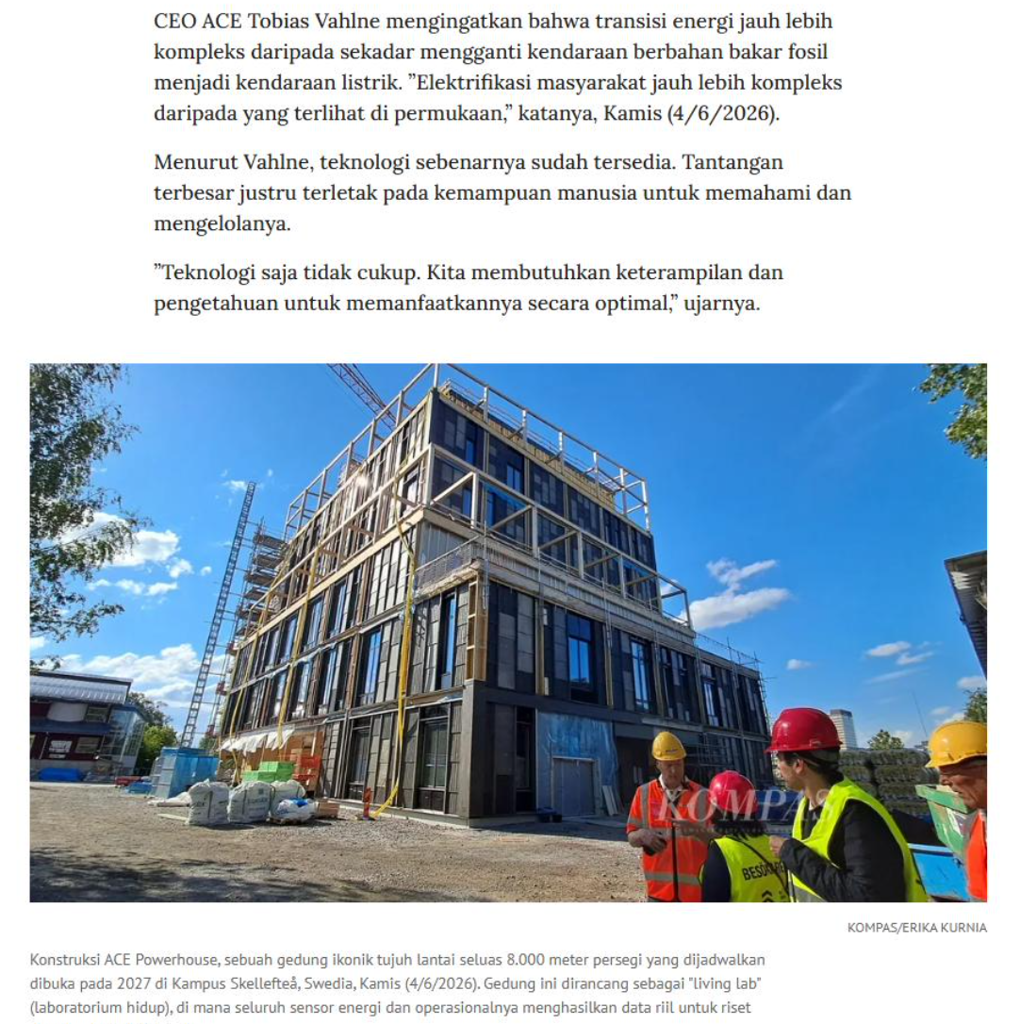
Shortly afterwards, the first feature article about ACE Powerhouse was published in Indonesia by the magazine Kompas – an early sign that the questions we are working with here are global. And that the shift to electrified and circular systems is drawing attention far beyond Sweden.
Designing spaces shaped by energy and transformation
As ACE Powerhouse takes shape, the interior environments are being developed in parallel with the building itself.
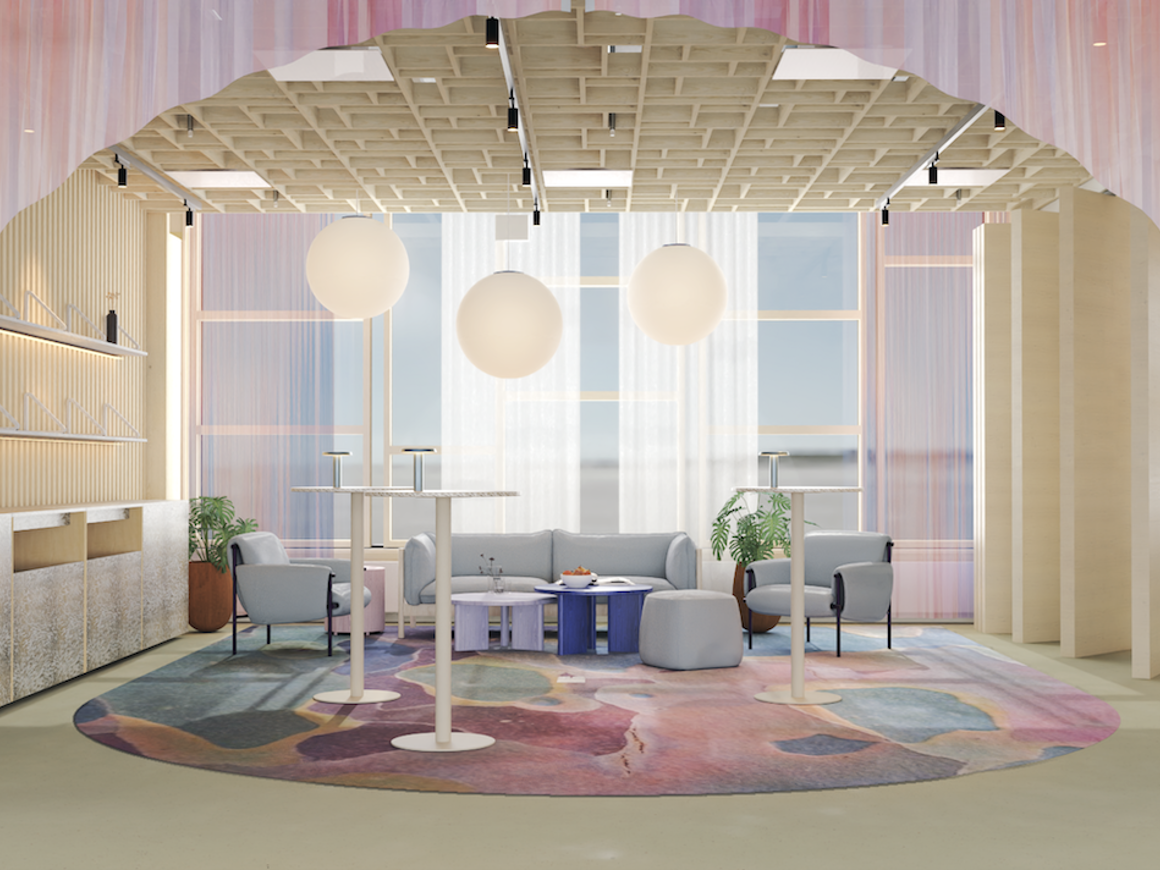
The interior, developed by interior architecture and design studio Interesting Times Gang (ITG), works under the theme Forms of Energy. It explores energy as something that circulates, transforms, and takes shape within space.
“We want the building to pulse with energy. You should genuinely want to be there to feel energised, to work, meet and exchange ideas,” says Alexander Westerlund, Head of interior architecture and design at ITG.
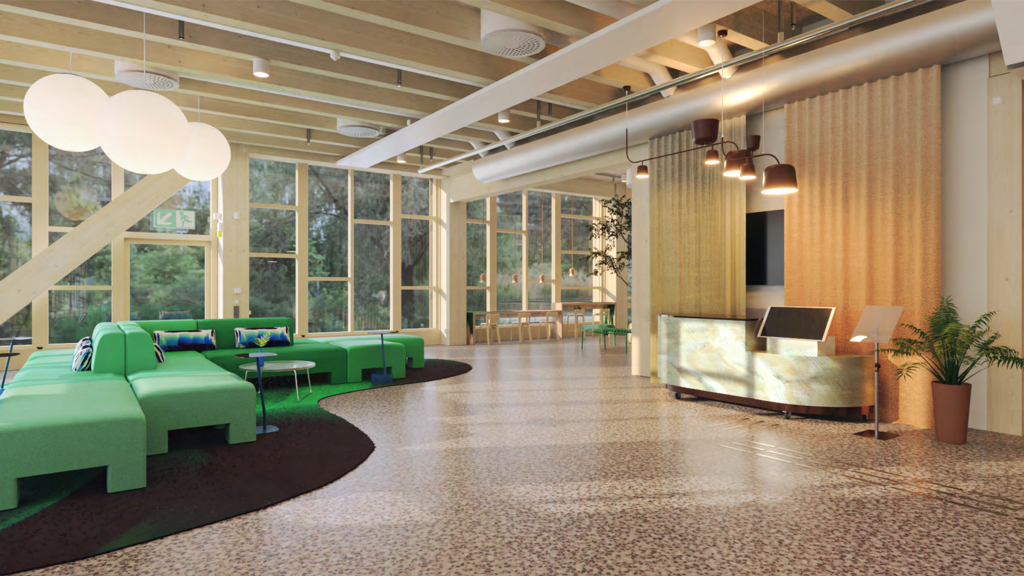
Interior concept visual by Interesting Times Gang.
Colors move through the building in gradients – more intense where movement and activity are at the center, and more subdued where the body is meant to rest. The result is a spatial logic where atmosphere, function and flow are directly connected.
Reclaimed materials are combined with bio-based and circular solutions such as mycelium, bioplastics and industrial by-products. Circular materials are not treated as a separate layer, but as part of the physical expression of the building itself.
This approach shapes more than material choices. It defines how the building is experienced – as something in motion, where change is visible rather than hidden.
In this way, the interior design reinforces a core idea behind ACE Powerhouse: innovation is not only something that happens inside the building, but something the building itself expresses.
Looking ahead
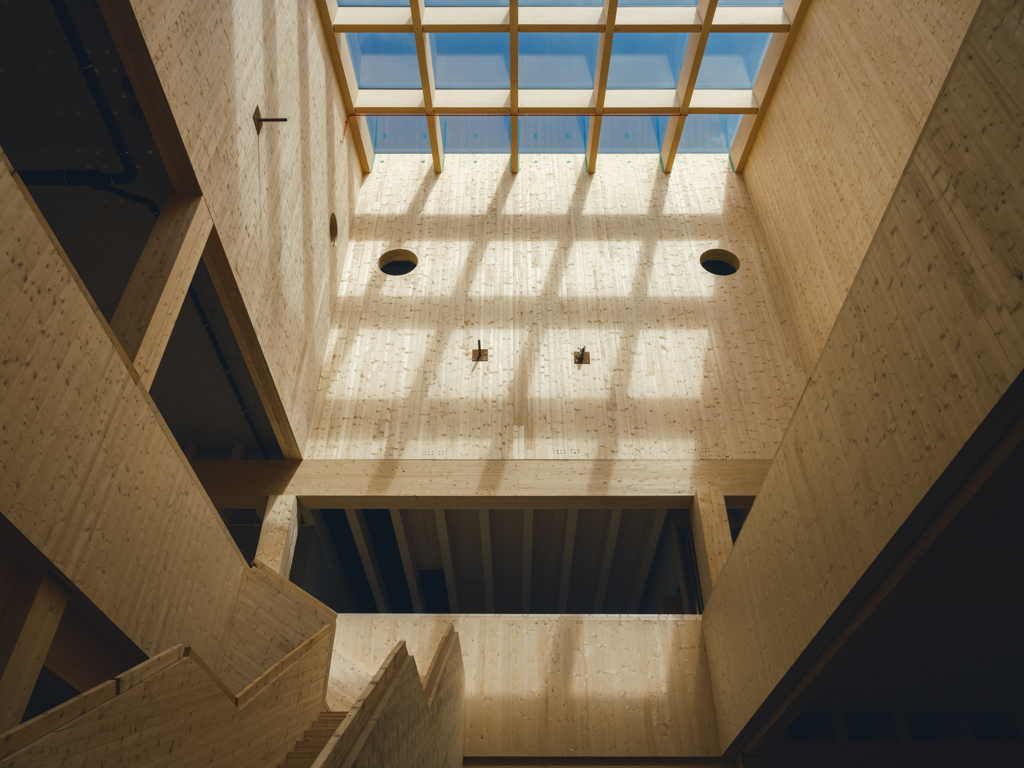
ACE Powerhouse has already been recognised as Sweden's Environmental Building of the Year 2025 and is moving towards completion in 2027.
The next phase of the project will focus on turning the vision into lived experiences: finalising the interior environments, preparing future workspaces and creating the conditions for the collaborations that will fill the building with life.
At the same time, work is underway to establish the first lab environments. Current plans include a direct current (DC) lab and a cybersecurity lab, creating hands-on settings where research, education and industry can collaborate around some of the key challenges in the shift.
The building may still be under construction, but the community around it is already taking shape.